For many contractors across the northern parts of the country, the winter months are the off-season. The plants are shut down and the big iron is sitting idle in the yard or in a garage for storage. However, it's not so simple a thing as just parking it in a random spot for a few months, and cranking it back up when the first spring-time jobs come calling. That's a recipe for disaster.
If your operations are shut down it's time to start thinking about how to properly store, maintenance, and prepare your large capital investments for the coming season. That is the best way to give your hard-working crews the optimal chance for continued success during the busy summer. Taking the time to care for these tools and machines now can mean avoiding costly downtime or rental charges when you absolutely cannot afford to do anything else.

All answers attributed to Thomas Travers, Director - Technical Sales, Astec Inc.
What are the most critical steps a contractor should take when preparing an asphalt paver for winter storage after the final job of the season?
Removing all loose asphalt from machine, open extensions, tunnel kits and flow gates and clean both sides of components. Spray down all areas that were cleaned. Check conveyer chains and head shaft and tail shaft for buildup and remove
How does cold weather impact the performance or longevity of core systems like hydraulics, augers, conveyors, and screeds?
Fill all fluid levels to their fill marks and secure all caps to avoid water intrusion. Cold storage will not affect these systems during storage. Hang the screed from its safety straps to avoid freezing to the ground.
How should contractors handle fluids such as engine oil, hydraulic oil, and fuel to prevent contamination or gelling in freezing temperatures?
Owners manuals will have any additives that the manufacture of said components suggests for long term storage pay close attention to the DEF tank and DEF fluid requirements.
What are the most common offseason maintenance mistakes that can lead to costly repairs come spring?
Cold start below 0 degrees is very hard on starters and engine components. Make sure battery’s are accessible for possible jumping if needed. Best to plan warmer days for moving machines inside for maintenance.

How should operators care for the electrical systems, sensors, and grade-control technology during extended downtime?
Remove all sonic sensors, hand held remotes, grade and slope sensors and store indoors for the winter. Also cover seats with heavy garbage bags to protect from the elements.
What precautions should be taken with the screed heating elements and control systems when temperatures drop below freezing?
Hang the screed from its safety straps and tilt slightly to avoid water from collecting around elements.
How can telematics or machine monitoring help contractors track paver health and schedule proactive maintenance during the winter months?
Contractors already monitor telematics to plan their fluid change intervals. It is important to have visibility to this data before storing to order necessary parts and fluids.
Are there particular wear parts or components that you recommend replacing or servicing before winter to prevent startup issues later?
Manufactures post their intervals for checking wear on all moving parts verify the current hours vs the wear check tables in your manual
When spring paving season returns, what’s your ideal inspection or startup checklist to ensure the paver performs at full capacity?
Look for any guests that might have made a home in your machine and clean out appropriately, recheck all fluid levels and connections. This is also a great time to level your screed plates and check all elements for proper heat.

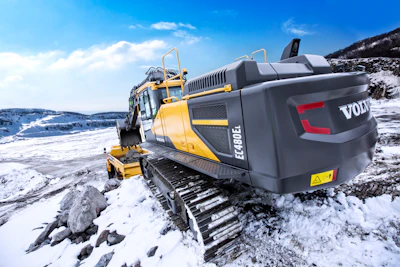
All answers attributed to Sejong Ko, Product Manager — Large Excavators, Volvo Construction Equipment
How do cold temperatures affect the major systems of an excavator, such as hydraulics, electrical components, and undercarriage performance?
In the hydraulic system, low temperatures cause the oil to thicken and become more viscous. This can increase resistance and put extra stress on the pump and other components, leading to inefficient operation until the oil warms up.
For electrical components, the battery is the main concern. Cold environments can cause a battery to lose up to 50% of its cranking power, making it much harder to start the engine.
As for the undercarriage, performance suffers when mud or ice gets packed into the tracks or around the rollers. This can cause excessive wear on the tracks and can even lead to frozen rollers that can’t turn freely.

What are your best-practice recommendations for preparing an excavator that will sit idle for extended periods during winter?
Winterizing your excavator for off-season storage is crucial for a smooth spring start. Start with a thorough cleaning of the entire machine — especially the undercarriage — to remove any debris. To avoid rust, touch up the machine’s exterior paint and treat exposed parts with an anti-rust agent after properly lubricating all grease points. Check for fluid leaks and component damage and make all necessary repairs. The engine’s glow plugs and air inlet heaters are also critical to inspect before it gets too cold.
Next, tend to the fluids. You should change the engine oil and filter and fill the fuel tank to prevent condensation from forming inside the tank, which can lead to gelling or contamination. It’s also a great time to check the coolant concentration with a hydrometer, as the right glycol mix is essential for lowering the freezing point and protecting your engine. Since diesel exhaust fluid (DEF) freezes at 12º F (-11º C), if you’re storing the machine all winter, we recommend draining the DEF tank to avoid potential issues.
Store your excavator in a sheltered location (ideally a heated building) to shield it from wind, snow and ice. If you must store it outside, level the ground and apply the parking brake; then cover the engine air intake and exhaust outlet to keep dirt and water out.
In extreme cold, remove the battery and store it in a warmer location on a wooden, plastic or rubber surface. Be sure to check on it periodically and trickle-charge it if needed. Regardless of storage location, make sure the battery is fully charged. Its charge and storage temperature are the two biggest factors in how quickly a battery will self-discharge and become susceptible to issues.
Whenever possible, start up the excavator once a month and run it at a low idling speed for about an hour. Once it’s at working temperature, test the function cycles (travel, swing and attachments).

What types of fluids, lubricants, or additives do you recommend for optimal cold-weather performance and protection?
Synthetic and multi-grade oils cover a range of temperatures, but if you’re working in conditions below 0º F, you should consider using cold-weather hydraulic and engine oils. Check your excavator’s manual and/or consult your local dealer or OEM to determine whether your machine comes with the appropriate engine oils, greases and hydraulic fluids or whether you should swap to an arctic-grade or low-temperature viscosity in the winter.
With fuel, you may want to consider switching to a dedicated winter blend (often No. 1 diesel). This fuel has a lower cold filter plugging point and is much less prone to gelling than No. 2 diesel. If you’re using No. 2 in really low temps (around -20º or -30° F), an anti-gel additive may be necessary.
And of course, don’t forget the coolant. Check its concentration to ensure that you’ve got the proper water/glycol mix to prevent freezing — this is absolutely necessary to avoid costly damage.
How should contractors approach daily startup and shutdown procedures when working in below-freezing temperatures?
Before startup, do a thorough walkaround. Clean the undercarriage and around the swing mechanism, as ice can tear seals. Make sure the rollers are free of debris and can turn easily.
If your excavator has an engine preheating function like a block heater, take advantage of it to make startup easier. If you don’t have one and you’re starting up a cold engine, let it warm up for at least 10 minutes before putting it to work. This gives the engine, hydraulic and coolant fluids time to reach their optimal operating temperatures, ensuring efficient function and preventing undue stress.
For shutdown, always refuel at the end of the day. This prevents air space where condensation can form overnight. If your machine is equipped with a delayed engine shutdown feature, use it. This function keeps the engine running briefly after the key is turned off to properly cool the turbocharger, which helps prevent a costly component failure.

What are the most common cold-weather maintenance mistakes you see contractors make, and how can they be avoided?
The most common mistakes we see involve fluids and batteries:
- Neglecting fuel and filters: Failing to switch to a winter-grade diesel in extreme cold results in the fuel gelling and clogging the system. And neglecting to drain the water/fuel separator daily when shutting down can lead to freezing and blockages.
- Ignoring the battery: Because a battery can lose so much power in freezing temperatures, a contractor might try to crank a weak or low-charge battery too many times. This can wear down the starting system components or even leave the machine completely stranded. I recommend testing batteries before winter, using a battery warmer, or taking the battery out and storing it on a tender.
- Improper use of DEF: DEF freezes at a relatively high temperature, and contractors often fail to properly manage it. Either they’re not waiting long enough for the on-board heater to thaw it out, leading to fault codes and engine derate, or they’re storing it in a non-heated area, leading to its degradation.
Can you discuss the importance of battery maintenance and storage, and how temperature fluctuations impact performance and lifespan?
A cold battery’s chemical reactions slow down, significantly reducing its capacity and cranking power and making it much harder for a diesel engine to turn over. If a battery is already weak from a hot summer — which encourages corrosion — the added strain of a cold start can easily kill it.
For extended storage, your best bet is to remove the battery entirely and keep it in a temperature-controlled environment (ideally on a tender to maintain a full charge). If removal isn’t feasible, you should still keep it on a tender and consider using a battery warmer that either slides under or wraps around the battery to help it retain its charge. And, as noted previously, check it periodically and trickle-charge as needed.
When you’re ready to start the machine in the spring, inspect the terminals for corrosion, check the electrolyte levels, and confirm the specific gravity. Proper maintenance ensures that the battery has the strength to deliver the high current needed for a cold start and prolongs its overall service life.
How should hydraulic hoses, seals, and fittings be inspected and maintained before winter storage to prevent damage or leaks come spring?
A thorough inspection of the hydraulic system’s hoses, seals and fittings is important because low temperatures can make rubber components brittle and susceptible to cracking. You should check hoses for signs of wear, cracking or damage from chafing. Look for soft spots or swelling (which indicate internal breakdown) and replace damaged hoses immediately. You may even want to consider switching to arctic-rated hoses. Inspect all fittings and connections for signs of weeping or leaks. While some black rubber O-rings can shrink in the cold and may reseal once they warm up in the spring, it’s essential to look for actual damage before replacing them. Addressing these potential points of failure now prevents leaks and costly downtime when the spring work season begins.
What role does proper cleaning and undercarriage care play in preventing corrosion or ice buildup during the offseason?
Cleaning and taking care of the undercarriage is one of the simplest, most effective forms of preventive maintenance possible for an excavator. If soil, clay or other debris is left on the undercarriage, it can increase stress on the components and prevent rollers from turning freely. A roller that can’t turn is quickly worn flat, leading to excessive track and sprocket wear. A good cleaning also removes corrosive elements like salt or abrasive materials that can eat away at components while the machine sits idle. By pressure-washing and scraping off all debris before storage, you minimize wear and significantly reduce the chances of rust and costly undercarriage repairs come spring.
Do you recommend indoor storage, or are there best practices for outdoor storage that can still protect equipment from the elements?
Indoor storage is ideal for keeping the machine at an optimal temperature, making startup easier and protecting the battery and sensitive components. However, indoor storage isn’t always possible. Here are a few best practices for outdoor storage:
- Sheltered location: Park your excavator where it’s shielded from wind and blowing snow. Even a simple three-sided shelter or a tarp covering can help.
- Level ground: Position your machine on level ground and engage the parking brake.
- Prevent entry: Cover the engine air intake and exhaust outlet to keep dirt, water and potential pests out of the system.
- Check fluids: Make sure that the fuel tank is full, the coolant is mixed correctly and the DEF tank is drained before final shutdown. These steps are critical regardless of where the machine is stored.
How has telematics or onboard diagnostics changed the way contractors can monitor machine health during long periods of inactivity?
Telematics systems like Volvo ActiveCare Direct provide a crucial layer of monitoring for machines even when they’re sitting idle. The most immediate benefit is the ability to track a machine’s precise location and engine start attempts. This is an invaluable security feature during long periods of inactivity. For maintenance, telematics programs relay fault codes directly to a fleet manager. For example, if an operator attempts a cold start and the DEF system isn’t thawed, the system will send an alert. Managers can also monitor battery voltage and machine hours to make sure that service intervals are maintained, even if the excavator is only run occasionally or if a battery is weakening. This proactive data allows you to address small issues like a low battery charge or a minor sensor fault before they escalate into major repairs that impact your uptime.

All answers attributed to Lars Arnold, Product Manager — Sustainable Power, Volvo Construction Equipment.
How does winter storage and maintenance differ for electric or hybrid excavators compared to diesel-powered models?
While you still need to care for the hydraulics and undercarriage like you would with a diesel machine, the primary concern with electric excavators is maintaining the battery’s health. For storage, we recommend keeping the charge between 20% and 80%. If possible, store and charge electric machines indoors. This prevents the ambient cold from sapping the battery’s energy, which can lead to longer charging times and decreased performance.
What special considerations should contractors take to protect battery packs and electrical systems from extreme cold?
The best thing you can do is store the machine indoors. When the temperature drops into the low teens or single digits (Fahrenheit), battery performance starts to suffer. Starting the workday with the batteries already at room temperature gives you a significant advantage, as it takes longer for the battery to drop to the ambient outdoor temperature.
Avoid charging when temperatures are below freezing unless the machine is specifically equipped with a heating system to manage the temperature. Most modern electric machines, including Volvo models, are equipped with sensors that will prevent charging or operation if temperatures are too low.
Can you describe any built-in features—like thermal management or charging safeguards—that help electric machines perform reliably in winter?
Volvo electric excavators are designed with several internal safeguards to ensure reliability and comfort when the temperature drops. Here are two examples:
- Battery protection: The most critical safeguard involves charging and operational sensors. These sensors monitor the temperature of the battery pack and, when the cold gets extreme, will prevent the machine from operating or accepting a charge.
- Operator comfort and efficiency: We offer a programmable cab heater option that allows you to choose the days and times you want to get into a pre-warmed and defrosted cab. The best part is that this takes place while the machine is plugged in and charging, so it won’t use any battery power before you start your workday.
How should contractors handle charging practices during cold weather or long-term storage periods?
The main rule for cold-weather charging is to charge indoors whenever possible, as this significantly reduces the time it takes for the batteries to reach a full charge. For long-term storage, the best practice is to not allow the battery pack to be fully depleted. While the exact ideal range can vary, we generally recommend keeping the charge between 20% and 80%. If you have a system with remote monitoring, use it to check the charge periodically, and top it off as needed to prevent a deep discharge that can shorten the battery’s lifespan.

All answers attributed to Sven Mayer- HAMM Product Development Support Engineer.
What are the most critical steps contractors should take to prepare a roller for extended winter storage?
Charge + Disconnect Battery, fill up the fuel tank, empty the water system + nozzles, check the freezing point of antifreeze, circulate antifreeze through the sprinkler system, and make sure to switch pumps to put antifreeze through the second pump.
How do cold temperatures affect compaction performance and key systems like hydraulics, water spray systems, and vibration mechanisms?
- Hydraulics: Need more time to get up to operator temperature. Drive system has longer acceleration ways + also the deceleration distance is bigger. In addition, steel drums can get very slippery when the temperature drops below freezing point.
- Water spray system- This needs to get winterized every day when there is a potential that temperatures will fall below freezing point. Always make sure to winterize both pumps.
- Vibration: Need more time to get up to operator temperature. Warm up period will take more time to speed up and stop. Also, it may not reach max frequency at extreme cold temperatures.
What’s your recommendation for proper cleaning and inspection before putting a roller into storage for the offseason?
Pressure wash the machine, clean radiator packet, clean air filter housing, grease all greasing points, drain water tank + water pipe + water nozzle, fill up fuel tank (help prevent condensation in tank), drain water in fuel filter, check freezing temperature of antifreeze, charge + disconnect battery, park the roller in best case under a cover where it is protected from the elements.
How should contractors handle fluids—engine oil, fuel, and hydraulic systems—before cold storage to prevent damage or contamination?
Fill up fuel, check the freezing temperature of antifreeze, fill all fluids to the max except water for spray bars.
Are there specific components, such as scraper bars or spray nozzles, that are particularly vulnerable to freezing or corrosion during winter?
Oil or grease hinges of scraper bars, remove check valve of spray nozzles + opening the pipe to let water drain out.
How can contractors ensure the water system remains protected when the machine won’t be in use for an extended period?
Drain the tank, drain the pipe, remove check valve of stray nozzles to let it drain out.

What are your best practices for maintaining and storing batteries in rollers, especially those equipped with telematics or advanced electronics?
Shut off the machine, wait for 10 minutes, disconnect the battery cable, make sure the battery is fully charged, this increases the freezing temperature of the battery itself.
Do you recommend any special tire or drum maintenance procedures to prevent flat spots, rust, or degradation during long-term storage?
- Make sure tires are filled to the correct tire pressure, store the machine as dry as possible protected from the elements. If this is not possible, drive the drum on some wood blocks to prevent moisture sitting under the drum and rust.
- For rubber tire rollers, jack up the machine and place on blocks so the tires are not in contact with the ground. This will prevent flat spots in the tires and reduce pressure on the sidewalls.
How can telematics or remote monitoring systems help contractors track equipment health and readiness during the offseason?
In most cases you will not be able to monitor the machine unless the battery is reconnected and the ignition switch is turned on.
When bringing a roller out of storage in the spring, what should operators inspect or service first to ensure a smooth return to operation?
Check all fluid levels, tire pressure, check if any animals were in the machine (mouse, or birds in exhaust pipe for example), charge the battery, grease the machine if not done before storage, check the air filter housing for animals, put water system back together, fill water system all the way and check for leakages, try out both water pumps if functional, adjust the scrapers. change if worn, check rubber isolators on drum mount for cracks, clean the radiator if not done when storing.
To understand some answers, I have to explain the term C-rate. C-rate indicates how quickly a battery can be charged or discharged, and temperature affects its performance. To understand what I mean I have an example table form the internet below. It shows the C-Rat depending on temperature and SoC. So you can see the best C-rate you have is between 15°C and 30°C and between 30% and 100% SoC.

Everything above or below affects the C-rate performance.
What are the unique challenges of storing and maintaining electric or hybrid rollers in freezing conditions?
This depends on what battery chemistry you have. In our case we have a NMC battery. If you want to work at cold temperatures, the best storage is in-house above 15°C. If storing the machine for a longer time, the best condition is to charge the battery up to around 30%-50% SoC. The machine can also be left outside. For maintenance you should check the SoC every month.
How should contractors approach battery care and charging practices when temperatures drop below freezing?
Battery care refer to point 1. If you want to use the machine in cold conditions, you can charge it as normal. The Battery Management System (BMS) controls everything automatically, activating the internal heater helps regulate the C-Rate.

What built-in protection or system features are designed to help electric rollers manage cold-weather performance?
Everything is controlled by the Battery Management System (BMS). It checks every parameter. If the battery is too cold, the internal heater warms the cells. This can take up to 10 min.
How does temperature affect charging efficiency and overall battery longevity for electric compactors?
The charging efficiency is reduced because the internal heater needs power. The charging time is extended due to the reduced C-Rate. The longevity of the battery isn’t affected as long as the BMS works.
What future advancements or technologies do you foresee improving cold-weather performance for electric rollers?
The most future advancements will be in the cells themself. Better cell chemistry (so the C-Rate and longevity will be better). Or better cell technology e.g. solid-state battery.
All answers attributed to Sven Mayer- HAMM Product Development Support Engineer.

Answers attributed to Chris Broome, VP of Product Development and Support, LeeBoy
What are the key steps contractors should take to prepare a motor grader for winter storage or limited cold-weather operation?
Preparing a motor grader for cold weather requires careful attention to detail to ensure reliable performance in harsh conditions. Contractors should begin by thoroughly greasing the unit, protecting all moving components from increased wear caused by low temperatures. Applying a moisture inhibitor to cylinder rods and linkages is equally important, as it helps prevent corrosion and freezing that could compromise functionality.
Fluids must also be checked to confirm they are rated for the expected cold temperatures, ensuring proper flow and responsiveness even in sub‑freezing environments. The battery deserves special focus as well; in cold weather, it works significantly harder to deliver the necessary power. Performing a battery test before winter operation helps confirm that it is in optimal condition and capable of withstanding the demands of the environment. By taking these steps, contractors can reduce the risk of downtime and keep graders operating smoothly throughout the winter season.
How does cold weather affect grading performance, hydraulic responsiveness, and the accuracy of blade or control systems?
Colder temperatures present unique challenges for grading activities. When the ground becomes frozen, penetration is significantly more difficult. Under these conditions, the blade may exhibit a chatter effect during fine grading, which can cause the grade control system to continually adjust in its effort to maintain zero. Proper adjustments to the circle and balde can help minimize this unwanted chattering. In addition, cold weather can reduce hydraulic responsiveness. However, advancements in hydraulic oil technology have greatly improved flow characteristics and operating speeds, helping to mitigate these effects.
What’s your recommended cleaning and inspection process before storage, especially around the moldboard, circle drive, and articulation points?
Before storing a motor grader it’s important to thoroughly clean the entire unit. After cleaning inspect the structural integrity of the frames and weld points by looking for cracks or stress marks, motor graders are used in harsh conditions that could put a lot of stress on the frame assembly and cylinder mounting weldments. After the crack inspection check the moldboard and circle drive for slop, adjust as necessary. Lastly be sure to top off all fluids and grease all grease points.
How should contractors handle hydraulic fluid, coolant, and fuel systems to protect against freezing, condensation, or contamination during downtime?
When winterizing a motor grader its important to not only ensure the hydraulic fluid, coolant, and fuel tank are properly filled but have the correct fluids for the climate your unit is being winterized in. Colder regions use different rated fluids to help with freezing or jelling, additives can be used to help with this common issues. To help prevent condensation in fuel systems be sure to top off the tank completely at the end of a shift and before storing the grader.

What are the most commonly overlooked maintenance tasks that can cause problems when bringing graders back into service in spring?
The most common maintenance issue when placing the grader back into service after properly winterizing it is dead batteries. To help prevent common battery-related issues during storage, it is recommended to connect a battery tender to the grader. Maintaining the battery with a tender throughout the storage period ensures proper charge levels, reduces the risk of discharge, and helps extend overall battery life.
How can contractors best protect exposed components like cylinders, cutting edges, and linkages from corrosion or moisture damage over the winter?
Cylinders and linkages are areas that commonly have issues with rust if not properly winterized. The best practice is to use corrosion inhibitor along with covers. I personally prefer to use Boeshield T-9 as a protective coating; however, there are several other high-quality products available that will also perform effectively. When the grader is parked its best not to leave the mold board down with out using blocks, this will help the mold board cutting edge from getting damaged from moisture in the ground. The corrosion inhibitor can be applied to all cutting edges to help damage from rust. In extreme environments it is best to store the grader indoors for best protection.
What best practices do you recommend for maintaining electrical systems, grade control sensors, and onboard diagnostics during the offseason?
Electrical systems can be a problem if not properly maintained for storage. A common mistake during the winterizing process is not drying the electrical system after pressure washing the grader. Use an air gun to carefully dry the electrical system, paying particular attention to plugs and connectors where moisture may accumulate. After drying makes sure there aren’t any exposed wire, if there is take proper steps to protect the wiring from the elements and use a little dielectric grease at all connectors to protect from moisture.
How can telematics or remote monitoring systems help contractors track grader condition and anticipate maintenance needs during long idle periods?
Telematic or remote monitoring systems are the standard now. These systems help fleet managers not only schedule routine services and track utilization rates but can help inform them if the unit is experiencing faults or problems. This information enables the scheduling manager to allocate equipment to jobsites without the need for onsite inspections. By providing clear visibility into equipment readiness, the manager can determine whether a machine is prepared for its next assignment or requires service, ensuring efficient deployment and minimizing downtime. Monitoring systems are also a huge help for technicians when its time to diagnose the machine giving them a window on how the unit is performing and sometimes leading them directly to the problem.
Do you recommend indoor storage for graders, or are there effective outdoor protection strategies for those without facility space?
It is always best to store machinery indoors if you can, it helps protect your investment and ensures the unit won’t be damaged from the weather. With that said graders can be stored outside in most conditions if properly winterized, the key is to properly winterize the machine when placing them in outdoor storage. Make sure to re-winterize the unit annually even when the unit wasn’t used that season.
When returning the grader to service after winter, what’s your recommended inspection or warm-up checklist to ensure smooth operation and system integrity?
When returning a motor grader into service its best to check all fluids and top off if necessary, ensure the battery is properly charged, and start and operate all function ensuring proper performance. If you winterized the grader before storage the in servicing of the unit should go very smoothly and without complications.

All answers attributed to Gregory Gatewood, Product Application Specialist, Milling & Paving.
What are the most important steps a contractor should take before putting a milling machine into winter storage?
- Thorough cleaning of the entire machine, especially the cutter housing, drum area, conveyors, and track frames.
- Inspect and repair before storage - don’t wait until spring. Address loose fasteners, worn teeth, damaged guards, leaking lines, cracked hoses and faults.
- Fluid management - top off fuel (with stabilizer), check coolant freeze protection, and ensure hydraulic oil is clean.
- Lubricate all grease fittings and moveable components. Winterize the water system by use of environmentally safe antifreeze, windshield washer fluid or by use of compressed air by blowing out each part of the water system.
- Protect from moisture - dry the machine fully and apply corrosion inhibitors where appropriate.
- Disconnect or maintain batteries properly - (remove, clean, and store on a maintain charger if possible).
How does cold weather affect the performance or longevity of critical systems like hydraulics, conveyors, and cutting drums?
- Hydraulics - Cold oil thickens, causing slow response, cavitation, higher wear, and possible pump strain along with seals can also become brittle.
- Conveyors - Belts get stiff and can crack, especially if tensioned incorrectly, seals can leak more easily.
- Cutting drum - Colder, harder materials are tougher to cut, increasing stress on the milling drum components and can result in cracking of holders, base blocks
What’s your best-practice process for cleaning and inspecting the cutter housing, drum, and teeth after the last job of the season?
- Remove packed material from around end rings, tool-holders, base blocks, ejectors and inside housing.
- Inspect tool holders for wear, damage, or looseness.
- Replace worn teeth - don’t leave worn or broken teeth installed, better start a season with a new set of teeth installed
How should contractors approach fuel, hydraulic oil, and coolant management to ensure proper protection during long storage periods?
- Fuel - Fill tank completely to prevent condensation; add a stabilizer or winter-grade additive. Drain water separators.
- Hydraulic oil - Make sure the oil is clean. If the oil shows contamination, change it before storage.
- Coolant - Verify freeze protection rating - typically down to at least -30°F/-34°C or appropriate for local climate and verify pH and additive levels.
- DEF systems (if applicable) - DEF can freeze at 12°F (-11°C) and below, leave tank half full for storage, when DEF freezes and unfreezes, it will not lose quality.

What components or systems are most susceptible to damage if the machine is left idle or exposed to freezing conditions?
- Hydraulic hoses, seals, and cylinders
- Conveyor belts
- Batteries and electrical connectors
- Water spray systems (if not winterized)
- Undercarriage components exposed to moisture
How do you recommend contractors handle electrical and control systems, especially for newer models with advanced automation or leveling systems?
- Disconnect batteries and store on a maintainer if possible.
- Inspect connectors and harnesses for signs of wear, corrosion, or rodent activity.
- Protect sensors (grade/leveling sensors, sonic sensors, slope sensors) by cleaning and storing them indoors if removable.
- Keep moisture out - condensation is a major risk in cold storage.
What precautions should be taken with the conveyor belts and chains to prevent seizing, cracking, or corrosion in cold temperatures?
- Thorough cleaning to remove millings and dust build-up.
- Set tension properly before storage; avoid over-tensioning by following the manufacturers recommendation.
- Condition belts with OEM-approved belt dressing if needed.
- For machines stored outside, cover conveyor systems to block water intrusion.
Can you speak to how telematics and machine monitoring can help contractors plan offseason maintenance more effectively?
- Track engine hours, idle time, fuel usage, and maintenance intervals.
- Identify fault codes that need attention before next season.
- Monitor battery voltage and machine location during storage.
- Generate preventative maintenance schedules for spring startup.
- Compare operator habits or productivity across last season to plan upgrades/training.
Do you recommend indoor storage for milling machines, and if outdoor storage is necessary, what protective measures should be taken?
Indoor storage is highly recommended - it protects electronics, hydraulics and conveyor belts from drastic temperature changes.
If outdoor storage is necessary:
- Cover engine compartments, electronics, conveyors, and operator station with breathable covers.
- Protect from rodents (steel wool, traps, and sealed entry points).
- Keep the machine out of direct snow load if possible.
- Remove batteries if temperatures get extremely low.
When spring startup arrives, what’s your recommended checklist or inspection sequence before the machine goes back to work?
Before starting the engine:
- Inspect all hoses, lines, belts, and electrical connections.
- Check fluid levels (engine oil, hydraulic oil, coolant, fuel, DEF).
- Reinstall batteries & verify voltage.
- Inspect drum, holders, and teeth—replace anything worn if missed before storage.
- Check conveyor belts for tension, cracks, or stiff spots.
- Verify greasing on all lubrication points.
- Inspect undercarriage, track tension, and drive motors.
After start-up:
- Warm up machine to operating temperature.
- Check for leaks or abnormal noises.
- Cycle all hydraulic system functions – height, steering, travel, conveyors, water systems etc.
- Test leveling system, sensors, and control displays.
- Confirm proper belt tracking and drum rotation.
- Perform a short test cut if conditions allow.