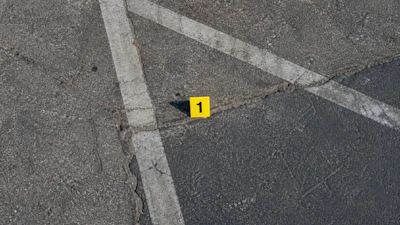
Neglected parking lots create serious legal, safety, and financial liabilities for property owners, including ADA compliance violations, trip-and-fall hazards, and poor customer impressions that damage business reputation and revenue. Partnering with qualified paving contractors who understand local codes, proper installation standards, and preventive maintenance helps owners avoid costly repairs and legal exposure.
Let's be honest. Parking lots are not the most exciting topic of conversation. As our busy vehicles and feet carry us through the day, the surface they travel on is an afterthought at most.
But so much lies beneath the surface.
With your eyes closed, you can probably describe what your lobby looks like, what your signage says and how your storefront is merchandised. But I'll eat concrete if you have a clue about the depth of asphalt beneath your parking lot, the condition of your catch basins or whether your striping still meets ADA requirements. That gap in knowledge and attention is a problem and, increasingly, it's one of the biggest liabilities you can carry as a property owner without realizing it.
The First Impression You Didn't Know You Were Making
I was at a mall recently. I'm a fairly seasoned driver, but I actually went the wrong way in the parking lot. The directional arrows were woefully faded, and it was impossible to tell which way was up. I narrowly missed slamming into another car. Needless to say, I was shaken and no longer in the mood to spend.
This is a perfect example of how parking lots have a domino effect: Before a customer walks through your front door, they've already formed an opinion about your business based on the condition of the parking lot. A lot riddled with potholes, faded lines or standing water tells a visitor that, meh, no one really cares. If that's true outside, what does it say about what's happening inside?
A worn, neglected lot isn't just ugly, it's also a deterrent. If it's bad enough, some customers may even turn around before they ever get out of their car. That's not a hypothetical—it's happened to people I know personally who show up somewhere with every intention of walking in and turn right back around because the lot told them everything they needed to know about what kind of experience was waiting inside.
The inverse is just as true. A well-maintained lot with crisp lines, smooth pavement and clear traffic flow signals order and care—qualities customers quietly associate with the business itself.
Either way, your parking lot makes an impression before a single word is exchanged with an employee.
When "Cheap" Becomes Expensive
Cutting corners on paving work is one of the most common mistakes property owners make. It's certainly tempting to go with the lowest bid to save a few dollars, especially in this tight economy. But as with most things, the cheapest work is rarely the best. Work that appears to save money up front can lead to costly repairs and premature replacement down the road.
A good example is pavement depth, something the average property owner rarely thinks about. Most people have no way of independently verifying whether a contractor installed the correct thickness for their specific traffic load, climate or municipal requirements. If a contractor cuts that depth to bring the price down, the problem doesn't disappear. It most certainly resurfaces—and usually sooner and more expensively than the property owner imagined. The same is true of sealcoating: a diluted or watered-down sealer might look lovely on day one, but it won't hold up the way a professionally mixed product will.
This pattern is consistent across our industry: A lot done cheaply the first time tends to cost more in the long run—once the corrosion, cracking, and premature failure show up and have to be corrected. Quality contractors distinguish themselves through low callback and warranty-repair rates. They get the depth, materials and installation right from the start. It's important to find a contractor you can trust to tell you what your lot actually needs, not what keeps their bid the lowest.
Liability Hiding in Plain Sight
Beyond curb appeal, a poorly maintained parking lot creates safety issues and legal exposure. What if I'd hit the car in the mall parking lot? What if someone had been seriously injured? Faded or missing lane markings and directional arrows are much more than a cosmetic issue.
Aside from driving, potholes and cracked pavement present their own trip-and-fall risks, and those risks escalate faster than most owners expect. Freeze-thaw cycles, especially in colder climates, can turn small cracks into major hazards in a single season. What looks like a manageable issue in the fall can become a significant liability by spring.
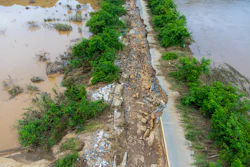
Then there's water. Storm activity has intensified in many regions over the past few years, and catch basins that aren't properly maintained or sized for today's rainfall patterns can back up quickly and lead to flooding. Standing water accelerates pavement deterioration, and heavy traffic combined with sun exposure and moisture is its own perfect storm. A catch basin problem is easy to overlook until it becomes a top-priority repair (usually after it's already caused significant damage).
The ADA Compliance Blind Spot
Americans with Disabilities Act (ADA) compliance is another area where business owners frequently underestimate their exposure. Accessible parking spaces, van-accessible aisles, proper signage, and compliant curb ramps and slopes are legal requirements, and violations can result in real financial and reputational consequences.
This is exactly the type of detail that falls outside a typical property manager's expertise. Municipal codes on accessibility and pavement standards vary from state to state and even town to town, and staying current on those requirements is a full-time job in itself. Partnering with a contractor who fully understands both OSHA and ADA standards—and who builds compliance into every project from the outset—removes a layer of risk that many owners don't realize they are carrying until a poor inspection or expensive claim brings it to light.
What to Watch Out For
You don't need to become a pavement expert, but there are warning signs worth learning to recognize:
- Faded or missing striping
- Potholes and alligator cracking
- Standing water or slow drainage
- Uneven, cracked, or deteriorating curbs, ramps, sidewalks and walkways that can create safety hazards for pedestrians
- Visible wear near heavy-traffic zones (entrances, loading areas and drive lanes typically fail first)
None of these issues resolve themselves, and most get significantly more expensive to fix the longer they're left unaddressed.
Why This Requires a True Partner, Not Just a Vendor
This is where the right contractor relationship makes all the difference, particularly for businesses managing more than one location. Multisite operators face a unique version of this problem: A paving standard that works in one state may not satisfy the code in another, and coordinating consistent quality across dozens or hundreds of properties is its own logistical nightmare.
The contractors who do this well combine local knowledge with national reach. That means having enough regional presence and vetted partners to understand the municipal quirks of any given market, while still being able to offer one point of contact for an operator with locations scattered across the country. It's the difference between hiring a new vendor every time you open a new location and having a single partner who already understands what each market requires.
Relationship building matters here more than people expect. The businesses that keep coming back to the same paving partner year after year, whether they have one lot or hundreds, do so because that partner has made their jobs easier and taken the operational headaches off their plates. That kind of trust doesn't come from a single successful bid; it comes from consistent follow-through, project managers who stay in touch from start to finish, and a track record of getting it right the first time.
It starts from the top. Companies with a genuine, invested culture—where leadership cares as much about the people doing the work as they do about the clients receiving it—show that commitment in the quality of what actually gets installed in the ground. That's not a small thing in an industry where reputation is built job by job, lot by lot.
Protecting Your Investment
A parking lot is easy to overlook because it doesn't demand the daily attention a storefront or a piece of equipment does. But that's exactly what makes it risky. Problems accumulate quietly until they become urgent, expensive or legally significant.
The businesses that get this right treat their pavement the way they treat any other asset: with a plan, a trusted partner and regular assessment rather than reactive repairs. A qualified paving partner can walk a property, flag developing issues before they become liabilities and provide guidance based on real expertise in depth requirements, material standards and local code. This knowledge isn't intuitive to property owners, no matter how well they run their business.
A parking lot's longevity comes down to three things: paving it right, partnering with the people who rely on it, and protecting the investment over the long haul. In the end, a parking lot is the first impression your business makes, a safety commitment to everyone who visits and, if neglected, a liability that can catch even the most well-run business off guard. Protecting it is part of protecting your business itself.