Some companies grow because someone saw a market opportunity. Others grow because someone saw a calling. In the case of DeHart Asphalt, the story begins in the late 1970s, when Patricia and Leonard left Michigan for Arizona and carried their trade with them. They launched Western Asphalt in 1980 with Leonard’s father after moving in 1979, beginning what would become a multi-generational journey in pavement maintenance, crack sealing, and sealcoating across the state.
What they didn’t know then was that a young man named Robert Bonura (Partner/Manager of DeHart Asphalt) would join the family decades later, helping them carry the DeHart legacy forward. After spending some time with them on the jobsite and in their company yard, I can say that this group has all the goods. They know their community, they know what they're best at, and they know how their making a difference.
Learning the Trade in a Tough Market
Arizona is unlike some states in the asphalt business. There’s no freeze-thaw cycle to battle. Instead, there’s the opposite problem: extreme heat that pushes pavement past its limits. That heat doesn’t just test asphalt. It tests contractors too. The Phoenix metro area is saturated with companies of every size, from private-equity backed rollups with to new little pop ups and even the seasonal teams that come-and-go every winter.
To survive here, let alone thrive, takes grit and an identity built on something that can’t be bought: a truly personal touch. That’s the space DeHart Asphalt occupies.
“We’re small. We’ve got seven people… But we want to keep it that way specifically, because then [we] control the quality,” Robert said. He has sat behind a desk before and knows exactly what he gave up to return to the field.
“It almost killed me, but once I got back out in the field, it was great. My body was moving. I was moving. My mind was clear.”
This is the mindset that shapes DeHart Asphalt. Not growth for growth’s sake. Not scale at any cost. Just real people showing up to do real work well. That's a theme across everything that they do.
The Work Itself
If you spend enough time with pavement maintenance contractors, you learn that every region has its own quirks, its own challenges, and its own fixes. In Arizona, one of those fixes is mastic.
Most property managers know crack seal and they know sealcoat. But mastic is something else entirely. When I asked whether customers struggle to understand it, Robert explained that education is key, but so is honesty. “I don't want to oversell what it is,” he said.
Mastic has aggregate mixed into the binder, giving it structure that traditional crack sealant doesn’t have. It “self levels,” pours hot, and hardens into a surface strong enough that you won’t sink a high heel in it even when cracks reach four or five inches wide. In a climate where asphalt can reach 120 degrees on a summer day, that can be a big selling point.
In a moment of real levity, Robert compared application to the winter Olympic sport of curling. “You just have to be able to control it,” he said, laughing. “It literally will go to where it's needed, the material just shifts itself.”
For DeHart Asphalt, mastic, crack sealing, and sealcoating remain their bread and butter, supported by paving, patching, and striping. On average, the company is 60 percent seal coating and about 40 percent paving.
A Family Story You Can’t Invent
One of the most interesting things about DeHart story is that Robert didn’t grow up in the business. He married into it. He joined the industry...heart first.
He met Amanda, Patricia and Leonard’s daughter, the day after Christmas in 2004. By March, he was working full-time for the family. By July, they were married. “For the first two years… we worked seven days a week,” he said. “Dark-to-dark.”
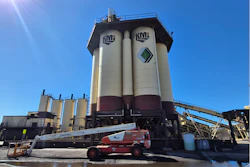
Two decades later, they’re still here. Their children work with them now too. The yard itself feels like a family home more than a commercial property. DeHart equipment lines the edges, machines organized by category: sealcoat rigs on one side, milling gear on the other, dump trucks, pavers, and a pre-Weiler showing the history of the trade in physical form.
And for Robert, this isn’t just a job. It’s part of who he is, who the whole family are.
“I left it for a while… But for some reason, I’ve always come back to this,” he said. “This is where I belong.”
The Legacy and the Future
The DeHart name has been around since 1995, carried over from time the family spent in Florida. But something remarkable happened before websites and social media were the norm they are today: the family business grew almost entirely by word of mouth.
“We just created a website this last year,” Robert said. "And still, we get calls from people who say, 'You did my parking lot 15 years ago, didn’t realize you were still around.'"
That longevity hinges on reputation, pride, and a kind of personal accountability that’s increasingly rare in an industry that has seen a nation wide shift in how its structured, and how it interacts with the general public.
When a project ever falls short, Robert says those are the toughest calls he gets. Not because of ego, but because, “I wasn’t able to give them what they wanted right off the bat.”
It’s not the kind of response you get from a larger company.
And that brings us to the future. While the broader industry has watched private equity groups buy up contractors across the country, neither of us believes that trend is sustainable. The pendulum will swing back toward smaller, personal, relationship-driven businesses.
Robert believes it too. “I think the smaller companies are going to ramp back up.”
For DeHart Asphalt, the mission is simple: keep the legacy alive.
“Our goal is just to keep that legacy alive and do it proud,” he said. “When it’s Jacob’s (Robert and Amanda's son) turn to take over, I think we’ve given him the same, if not better, than what they gave us.”
They don’t need to be an $18 or $20 million company. They just need to be what they’ve always been: a family business committed to quality, honesty, and community.
A place where people aren’t afraid to go to work the next day. Where employees aren’t numbers. Where customers aren’t accounts. Where the asphalt sticks together as well as the people. That’s the DeHart story, and we're excited to see where it goes into the future.