S.T. Wooten is managing a $22.9 million rehabilitation project on a 17.5-mile section of U.S. 74 in North Carolina, using GPS-guided technology and strategic scheduling to upgrade this busy beach route while maintaining traffic flow around seasonal restrictions.
- The project spans 17.5 miles through Columbus County between Whiteville and Lake Waccamaw, with completion expected by June 2027
- Work is restricted to 5.5 months per year due to North Carolina Department of Transportation prohibitions between Memorial Day and Labor Day
- Approximately 120,000 tons of asphalt will be used, requiring about 35 trucks daily to haul material from Wilmington
- GPS-based scanning technology improves milling accuracy and ensures consistent 3-inch depth and 2.5% cross slope specifications
- Six existing bridges are being preserved through waterproofing, joint replacement, and fiberglass-reinforced pile jackets rather than full replacement
Every summer, thousands of travelers rely on U.S. 74 to access North Carolina's popular southern beaches, making it one of the state's busiest seasonal transportation corridors. That popularity also makes it one of the more difficult highways to repair.
S.T. Wooten is currently leading a $22.9 million project to update a 17.5-mile section of U.S. 74 through Columbus County between Whiteville and Lake Waccamaw. The project includes milling and paving, ramp widening, bridge preservation, guardrail replacement and drainage improvements while maintaining traffic along the heavily traveled route.
 S.T. Wooten
Working Around Beach Traffic
Because U.S. 74 serves as a primary route to the coast, the North Carolina Department of Transportation (NCDOT) prohibits most construction activity between Memorial Day and Labor Day.
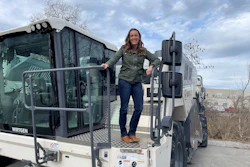
"It's a large project that has a tight window within working seasons," said Area Paving Manager Brandon Britt. "We've really only got 5.5 months during the calendar year."
To make the schedule more complicated, the contract doesn't allow crews to work a lot of weekends. The restrictions require careful coordination not only around when work begins, but also when it ends.
"For instance, if the asphalt plant went down on a Thursday, and we couldn't finish the paving on time, we would be fined LDs through the weekend," said Britt.
Despite those challenges, work continues to progress well. The team expects to have approximately seven working months available to complete paving and shoulder work by the end of 2026 – with final pavement markings installed ahead of the project's June 2027 completion.
Managing Logistics Across 17 Miles
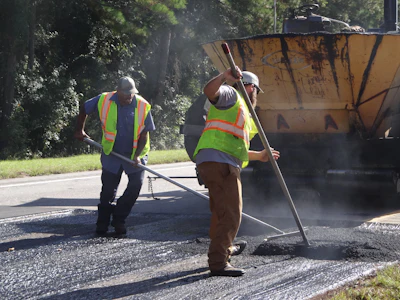
The U.S. 74 rehabilitation project will require approximately 120,000 tons of asphalt over its duration, with material hauled from S.T. Wooten's Wilmington asphalt plant. During paving operations, roughly 35 trucks will transport asphalt to the jobsite each day.
"Scheduling is key to keeping this project on track," said Britt. "In addition to our tight schedules, it's a long haul to our nearest asphalt plant in Wilmington. So we will be using around 35 trucks a day to haul asphalt."
Even during periods when construction pauses, planning continues.
"We've been ramping up gradually," said Britt. "We've held on to our sub-haulers. We've kept everyone aware of our timelines. We've been in communication with everyone so they know it's coming."
That coordination extends across trucking operations, asphalt production, subcontractors and field crews to ensure every available construction window is used as efficiently as possible.
Using GPS for Better Quality
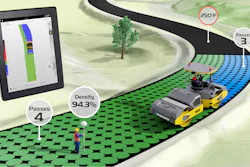
One of the project's more notable features is the use of a GPS-based scanning system to improve milling accuracy and produce a more consistent finished pavement.
"This system scans the existing cross slope," explained Britt, "so we can make corrections with the milling machine to achieve the desired cross slope."
The roadway is scanned before milling begins, and the data is uploaded into the milling machine to guide the operation. The technology helps crews consistently achieve the project's specified three-inch milling depth and 2.5% cross slope, creating a more uniform roadway before paving begins.
 S.T. Wooten
Preserving Existing Bridges
The U.S. 74 project also includes preservation work on six bridges. Instead of replacing the structures, crews are extending their service life through several rehabilitation techniques, including:
- Waterproofing bridge decks before placing new asphalt
- Replacing deteriorated asphalt plug joints that accommodate bridge movement
- Installing fiberglass-reinforced pile jackets to protect structural supports from long-term deterioration
These improvements help extend bridge life while minimizing both cost and disruption compared to full bridge replacement.
Collaboration Drives Progress
With multiple subcontractors, limited work windows and significant material demands, project coordination has become just as important as production. The collaboration between subcontractors, trucking operations and NCDOT has been a major reason the project has progressed successfully so far.
Foreman Ashton Adams and the crews have done a great job keeping operations moving and delivering a quality product. There's a lot going on across a project of this scale and that level of coordination has been critical.
Although the contract runs through June 2027, S.T. Wooten expects to complete the majority of paving and shoulder work during the 2026 construction season.
For the millions of residents and visitors who travel U.S. 74 each year, the completed project will provide a smoother, more reliable route to North Carolina's southern coast.